What Do Ghungroos Actually Teach a Dancer? More Than Rhythm, It Turns Out.
1 November 2026
When Every Step Has a Sound
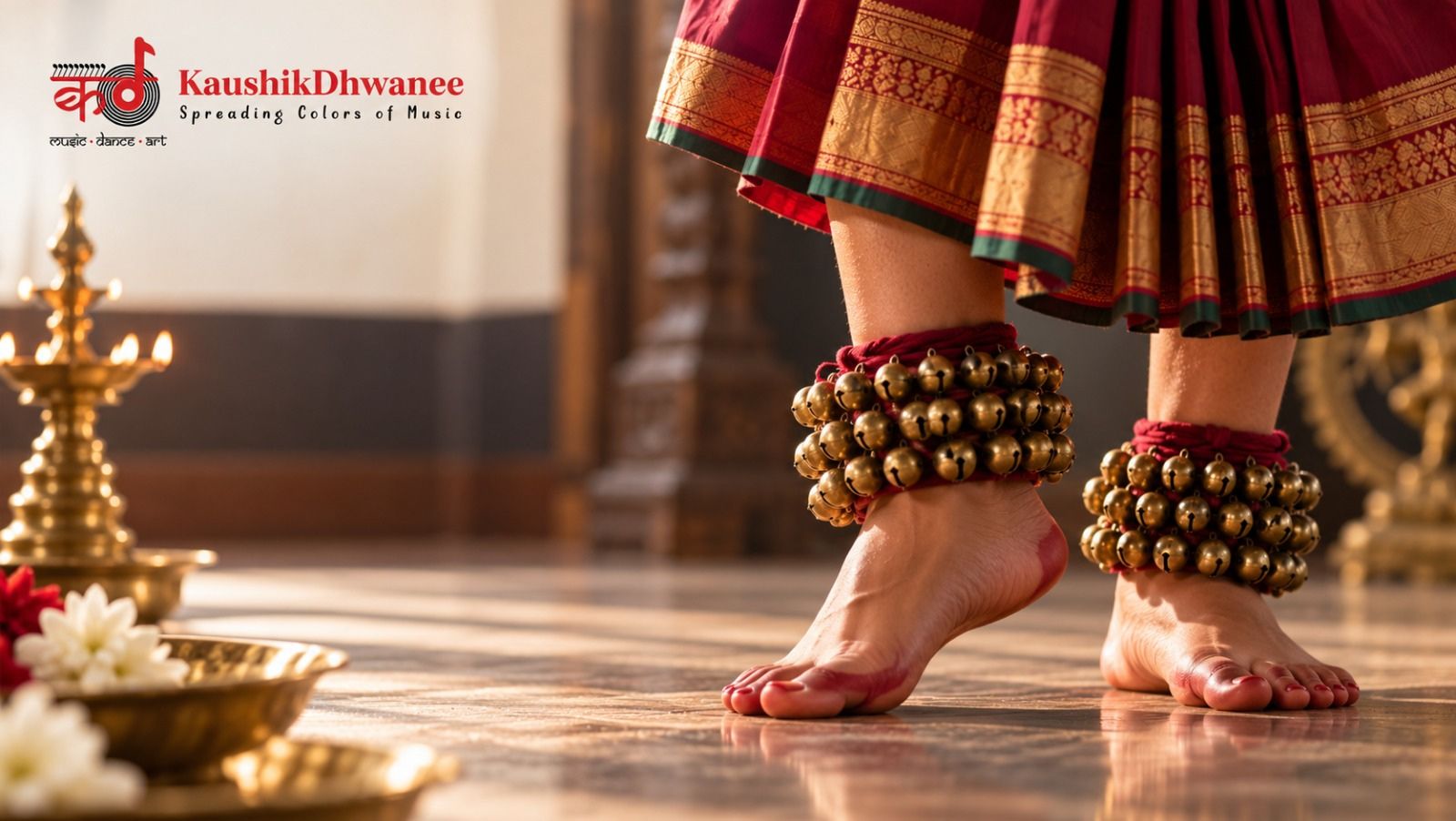
In Indian classical dance, footwork is closely connected to rhythm. Ghungroos make that connection audible.
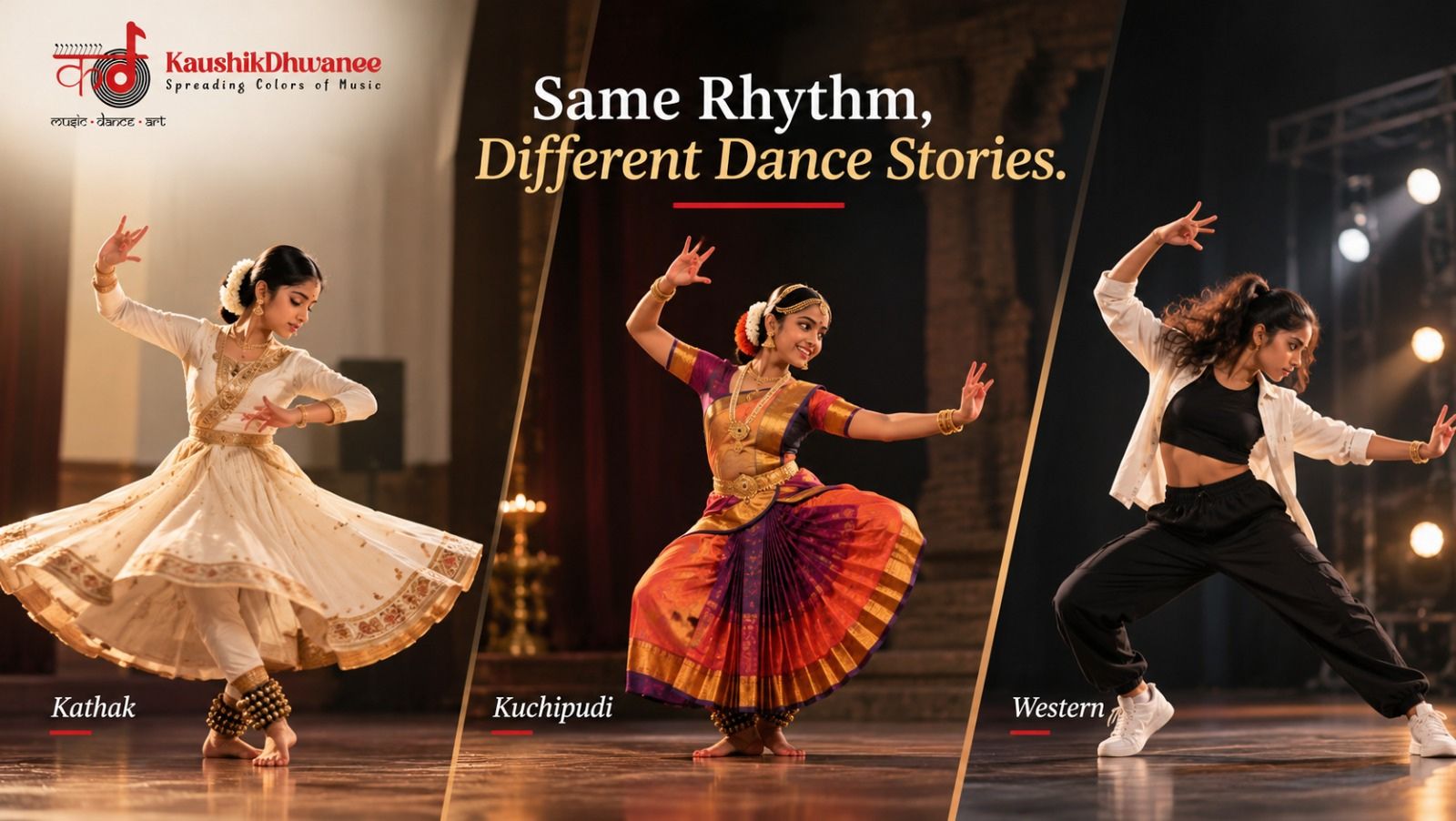
In Kathak, intricate footwork can interact directly with rhythmic cycles and musical accompaniment. The bells help bring the dancer’s rhythmic patterns into the performance.
In Bharatanatyam, footwork works alongside defined body positions, expressive gestures and rhythmic sequences. The sound of the bells becomes part of the overall presentation.
The important point? The bells don’t create precision by themselves. The dancer develops it through training.
The Real Lesson Is in the Practice
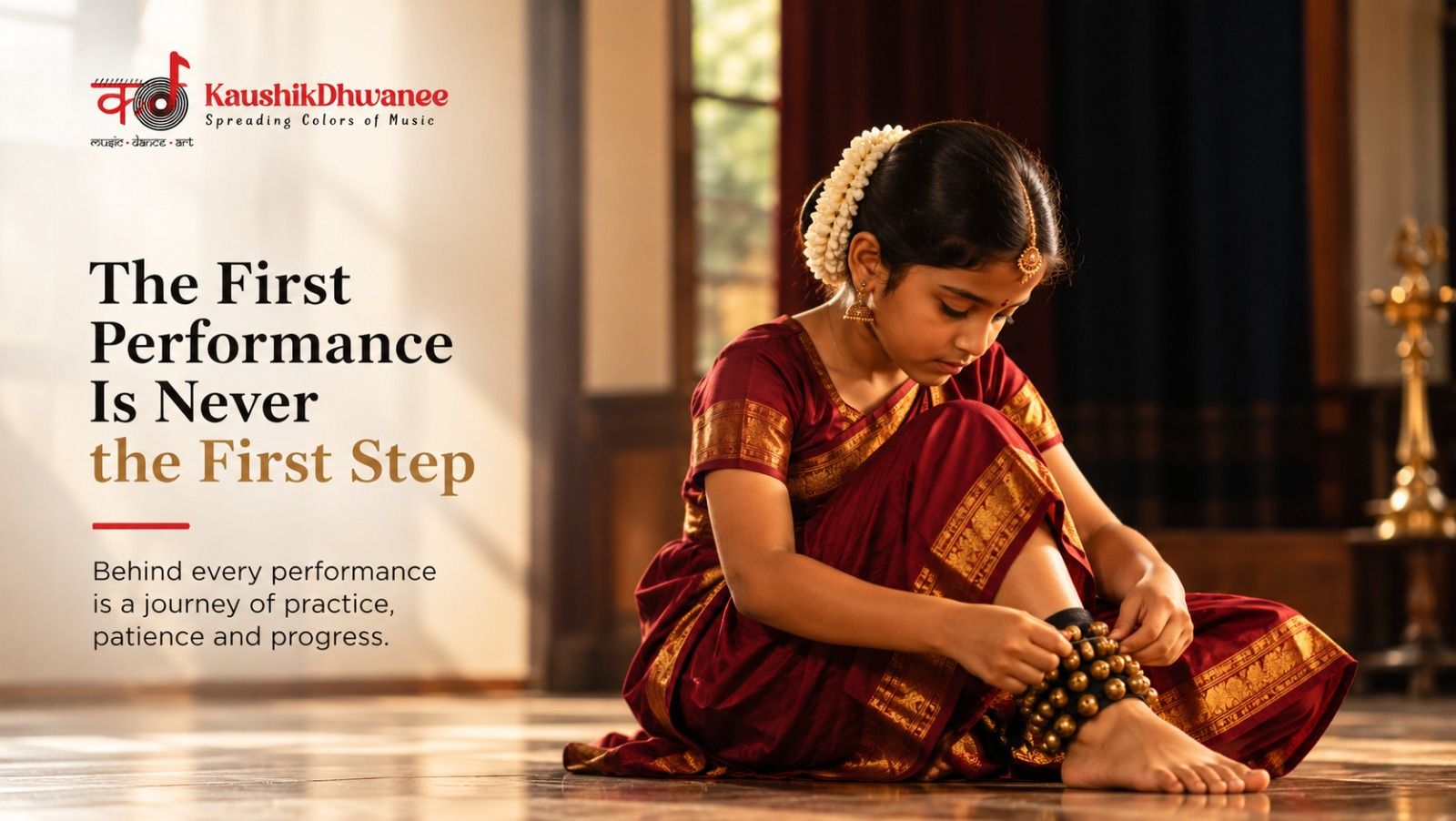
Wearing ghungroos means becoming more conscious of how the feet meet the floor and how movements align with the beat. Students gradually work on coordination, control and consistency.
And yes, there will be moments when the feet seem to have their own plans. That’s why dancers practise movements slowly before building speed and complexity.
Ghungroos also carry cultural significance, connecting the dancer to a long-standing performance tradition.
Begin Your Dance Journey at KD
At KaushikDhwanee, students can learn forms such as Bharatanatyam and Kathak through offline dance classes in Kondapur, Hyderabad.
Across India, beginners can start exploring dance through KD’s free 101 Learning Series, which also includes music and art lessons.
The bells may be small, but the discipline behind their sound is anything but.